
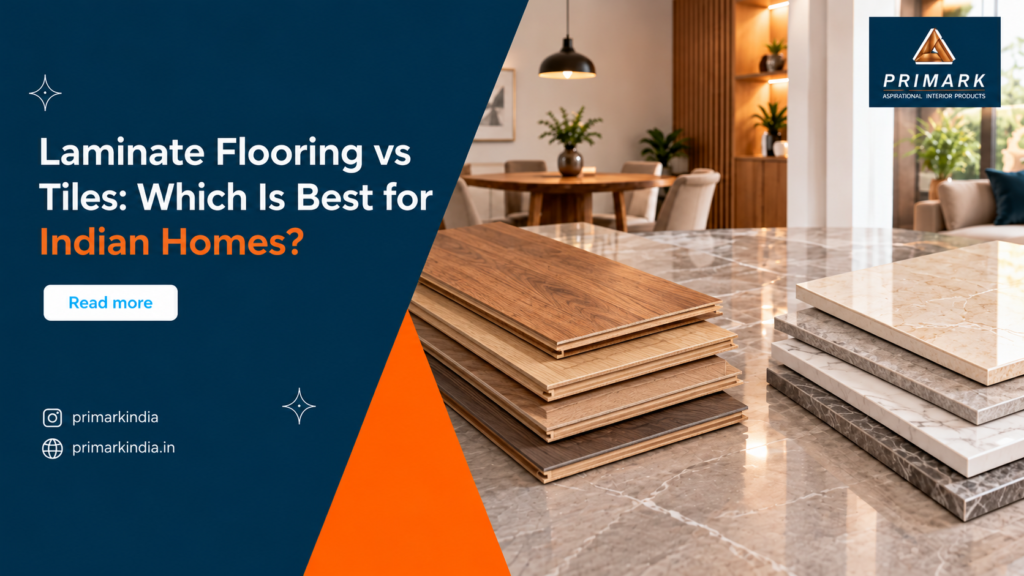
There are many important decisions to make when constructing or improving a home. Among them is the selection of flooring, which is a major factor that contributes to the home’s interior appearance, convenience, upkeep, and cleaning. It also influences how easy and affordable it will be to maintain. Most homeowners consider a variety of options that fall within both laminate and tiles.
Every material has its own benefits, and both laminate flooring and tiles offer a unique aesthetic and performance benefit. Laminate flooring is a nice and affordable choice that mimics the appearance of a traditional wood floor. It comes in a wide variety of designs. Tiles, on the other hand, are known for being very tough and resistant. The choice should be determined by your home’s individual circumstances and budget.
If you are thinking about flooring options for your home, this guide by Primark India explains the differences between laminate flooring and tiles to help you make an informed decision.
What Is Laminate Flooring?
Laminate flooring is a multi-layer flooring product designed to provide an attractive and durable surface. It typically includes a decorative layer that replicates wood or other materials, a core layer, and a protective wear layer.
Modern laminate flooring is available in a variety of colours, textures, plank sizes, and wood-inspired finishes. It can complement contemporary apartments, traditional homes, bedrooms, and living rooms.
Benefits of Laminate Flooring
- Stylish appearance: Offers realistic wood-inspired designs for modern interiors.
- Comfortable feel: Often feels warmer and less hard underfoot than ceramic or porcelain tiles.
- Design variety: Available in light oak, dark wood, grey, and other finishes.
- Easy routine cleaning: Usually requires sweeping or vacuuming and careful damp cleaning.
- Interior coordination: Can complement wooden furniture, neutral walls, and contemporary décor.
However, standard laminate flooring can be vulnerable to moisture if water reaches its joints or core. Water resistance varies by product, so checking the manufacturer’s specifications is essential.
What Are Floor Tiles?
Floor tiles are available in several materials, including ceramic, porcelain, and natural stone. They come in numerous colours, sizes, patterns, and surface finishes.
Tiles are widely used in Indian homes because wide varieties can withstand regular foot traffic and are relatively easy to maintain.
Benefits of Tiles
- Durability: Suitable tiles can handle everyday household use for many years.
- Moisture resistance: Many ceramic and porcelain tiles are suitable for moisture-prone areas.
- Design flexibility: Available in marble-look, stone-look, concrete-look, and decorative designs.
- Cleaning convenience: Most glazed tile surfaces are easy to clean.
- Multiple applications: Suitable products are available for kitchens, bathrooms, living rooms, and outdoor areas.
Tile performance depends on the material, quality, surface finish, installation, and grout maintenance. Polished tiles may also become slippery when wet, so choose an appropriate slip-resistant finish for bathrooms and other wet areas.
Laminate Flooring vs Tiles: Key Differences
Understanding the practical differences can help you select the right material for each room.
1. Appearance and Interior Design
Laminate flooring is an excellent option if you prefer the appearance of natural wood. Its plank-style design can create a warm, continuous look that works particularly well in bedrooms and living rooms.
Tiles offer greater variety in stone-inspired, marble-look, patterned, and contemporary finishes. They can suit both minimalist and traditional interiors.
Which is better? Choose laminate for a wood-inspired interior and tiles for a wider range of stone, ceramic, or porcelain designs.
2. Durability and Everyday Use
Both materials can perform well when selected and installed correctly.
Quality laminate flooring can resist everyday wear, but its surface may scratch, and its core may be damaged by moisture, depending on the product.
Tiles can be highly durable, although heavy impacts may chip or crack them. Grout lines may also need periodic cleaning or maintenance.
Which is better? Tiles are often a practical choice for busy areas and spaces exposed to frequent moisture. Laminate can work well in suitable dry interiors.
3. Water Resistance
Water resistance is an important consideration for Indian homes, particularly during the monsoon season.
Traditional laminate flooring may swell or become damaged if water enters the joints. Some newer products offer improved water resistance, but their suitability depends on the manufacturer’s stated limitations.
Ceramic and porcelain tiles generally perform well in wet areas when installed with suitable waterproofing, grout, and detailing.
Which is better? Tiles are generally the safer option for bathrooms, frequently wet kitchens, and other moisture-prone areas.
4. Comfort and Temperature
Tiles can feel cool underfoot, which many people appreciate during hot Indian summers. However, they may feel cold during winter and can be hard when standing for long periods.
Laminate flooring often feels warmer and may provide a more comfortable surface in bedrooms and other living spaces.
Which is better? Laminate may suit homeowners who prioritise a warm, wood-inspired feel, while tiles may appeal to those who prefer a cooler surface.
5. Cleaning and Maintenance
Both options are relatively easy to maintain when cared for correctly.
Laminate flooring generally requires regular dust removal and limited moisture during cleaning. Standing water and unsuitable cleaning products should be avoided.
Tiles can usually be cleaned with a suitable floor cleaner. However, grout lines may collect dirt over time, particularly in busy areas.
Which is better? Both can be convenient. The best choice depends on the product’s care requirements and the level of maintenance you prefer.
Which Flooring Is Best for Different Rooms?
Rather than choosing one material for the entire house, consider the requirements of each space.
Living Room
Both laminate flooring and tiles can work well in living rooms. Laminate creates a warm, welcoming atmosphere, while tiles provide flexibility in colours, patterns, and finishes.
Bedroom
Laminate flooring is worth considering for bedrooms where a wood-inspired appearance and a warmer feel are priorities.
Kitchen
Tiles are generally a practical option because kitchens experience spills, moisture, and frequent cleaning. If you prefer laminate, choose a product specifically rated for the intended conditions and follow its installation guidelines.
Bathroom
Suitable ceramic or porcelain tiles are usually more appropriate for bathrooms. Select a slip-resistant surface and ensure proper waterproofing.
Balcony and Outdoor Areas
Use tiles or other flooring products specifically designed for outdoor exposure. Standard indoor laminate flooring is generally unsuitable for exposed balconies.
Flooring in Jaipur: What Should Homeowners Consider?
When exploring Flooring in Jaipur, consider the local climate, room usage, installation quality, and long-term maintenance.
Jaipur experiences hot summers, dust, and seasonal monsoon conditions. These factors make it important to choose a flooring product that suits the environment rather than selecting it based on appearance alone.
Before purchasing, consider:
- Whether the area is dry or exposed to moisture
- Expected foot traffic
- Resistance to scratches and everyday wear
- Cleaning and maintenance requirements
- Installation and subfloor preparation
- Product warranty and manufacturer recommendations
For homeowners who prefer wood-inspired interiors, Wooden Flooring in Jaipur is another category worth exploring. Compare laminate, wooden flooring, and tiles based on the room’s requirements and the finish you want to achieve.
How to Choose the Right Flooring for Your Home
Before making a final decision, use these simple steps:
- Identify the room: Bathrooms and kitchens have different needs from bedrooms.
- Set your budget: Compare the complete cost, including installation and accessories.
- Check the specifications: Review wear resistance, moisture suitability, and maintenance requirements.
- Compare physical samples: Check how the finish looks with your furniture and lighting.
- Consider long-term use: Think about cleaning, repairs, durability, and replacement costs.
- Choose a suitable installer: Correct subfloor preparation and installation help improve flooring performance.
If you are searching for the Best Laminate in Jaipur, compare product quality, surface finishes, specifications, and installation support before selecting a product.
Primark India offers flooring and interior surface solutions for residential and commercial projects. Exploring samples and comparing materials can help you find an option that complements your interior design and practical requirements.
Frequently Asked Questions
1. Is laminate flooring better than tiles for Indian homes?
Neither is universally better. Laminate suits many dry interior spaces, while tiles are often more suitable for wet areas and spaces requiring frequent cleaning.
2. Is laminate flooring suitable for Jaipur’s climate?
It can be suitable for appropriate indoor spaces. Select a product suited to local conditions and follow the manufacturer’s installation and moisture-control recommendations.
3. Which flooring is better for bedrooms?
Laminate flooring is a popular choice for bedrooms because of its wood-inspired appearance and relatively warm feel. Tiles are also suitable if preferred.
4. Are tiles more water-resistant than laminate flooring?
Ceramic and porcelain tiles generally offer better moisture resistance. However, proper waterproofing, grout, and installation are still important.
5. Is laminate flooring easy to maintain?
Yes. Regular dust removal and careful cleaning are usually sufficient. Avoid excess water unless the manufacturer specifically permits the cleaning method.
6. Where can I explore laminate flooring in Jaipur?
Primark India offers interior and flooring solutions that homeowners can explore when comparing finishes and materials for their projects.
Conclusion
Several factors should inform the decision of laminate versus tiles. Among the most common of these factors are your lifestyle and how often your floors get wet or are likely to. In many cases, tiles make sense for kitchens and bathrooms, as these rooms tend to get wet. The opposite is true for the bedrooms and living spaces of your house. Laminate floors look like wood and provide a warm feel to the room.
Before committing, it’s worth comparing the specifications and installation/maintenance needs for different products.
Primark India provides customers with an array of flooring and interior solutions. Customers are free to experiment with a variety of materials and finishes with the help of the company. It’s also good practice for people who are thinking of home improvements and/or starting to build a new home to compare and contrast. One should find a balance between the aesthetic and practical needs of the flooring they will choose.